


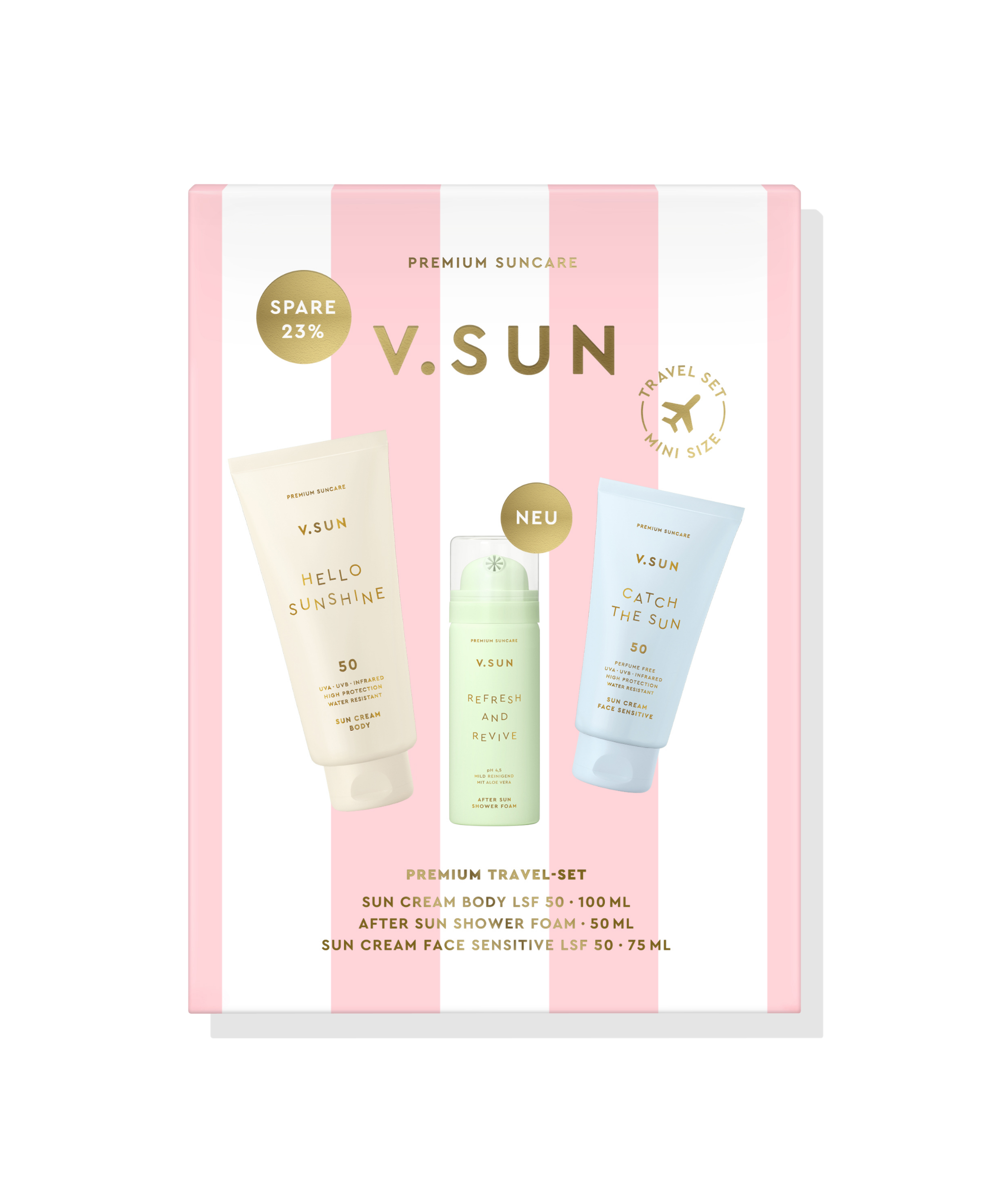





"Sustainable sunscreen?": How to protect your skin and care for our oceans
Estimates suggest that several thousand tons of sunscreen enter marine waters and coral reef areas each year. Scientific publications mention quantities of up to 14,000 tons annually. Certain ingredients and UV filters are therefore being scientifically studied with regard to their potential effects on corals and other marine organisms.
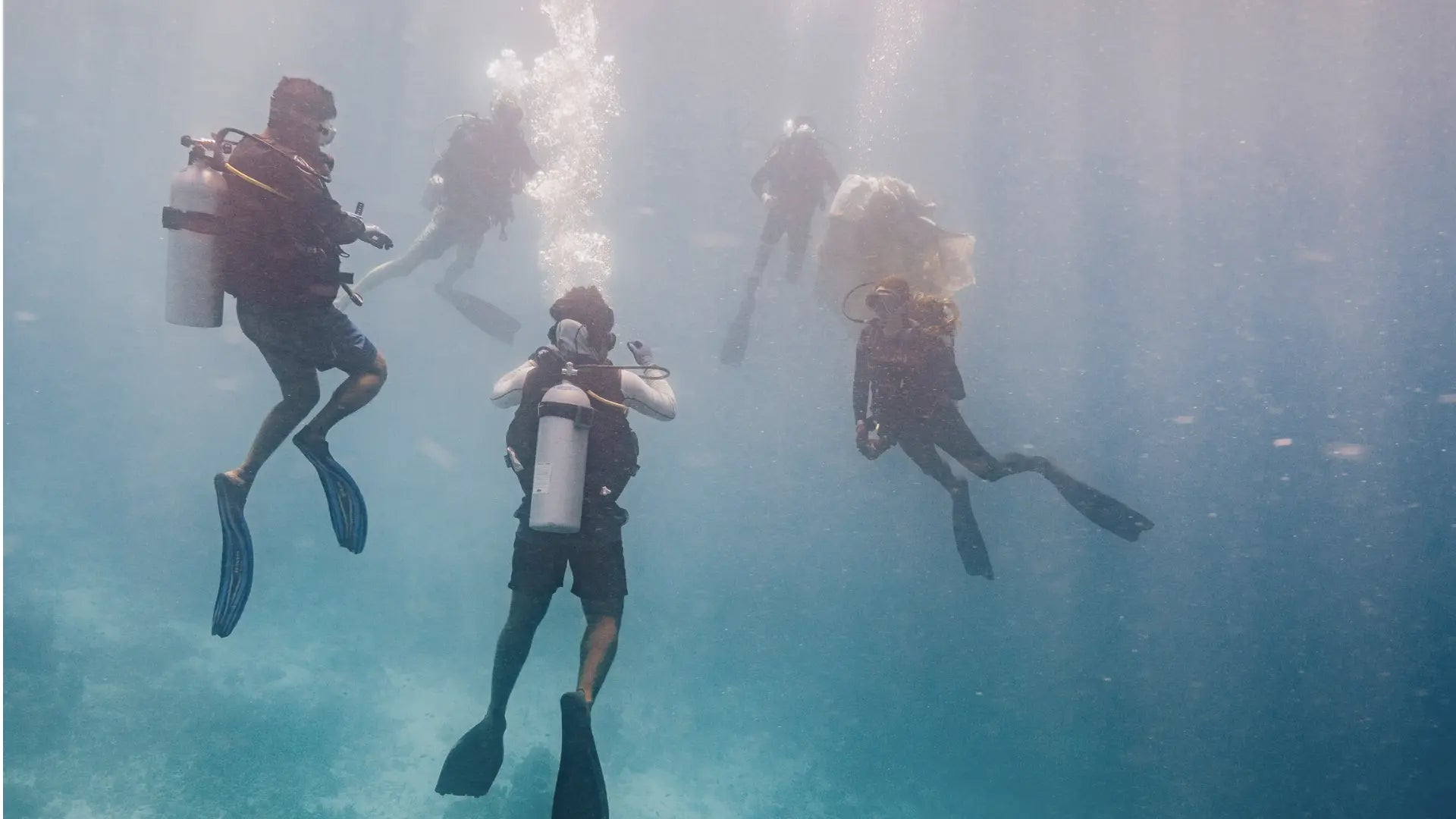
If you also want to take environmental aspects into account when choosing your sun protection, it's worth taking a closer look: Which UV filters are used? Has the formulation been tested ecotoxicologically? And what concrete measures does the brand take beyond that?
These are exactly the questions we at V.SUN have been working on since developing our very first sun protection products.
Why environmental aspects matter when it comes to sunscreen
When swimming in the sea or the pool, or even when showering, ingredients from sun protection products can end up in the water. That's exactly why it's worth taking a close look at the UV filters used. For certain filters such as oxybenzone and octocrylene, scientific studies have described negative effects on corals under certain exposure conditions.
Solid synthetic microplastic particles can also enter the environment in various ways and remain there for a long time.
The paradox: While we protect our skin from the sun, ingredients from sun protection products can end up in the water and, under certain conditions, affect the underwater world we love so much.
What “reef-safe” really means 🪸
The term “reef-safe” or “coral-friendly” is not a legally defined or protected standard. A label like this on its own therefore says nothing about how a specific sun protection formulation affects corals or other marine organisms.
Rather than relying on such terms alone, it's worth looking at the concrete information provided by the manufacturer: Which UV filters are used or deliberately not used? Has the specific formulation been tested? Under which conditions and on which organisms?
At V.SUN, for example, we deliberately avoid the following UV filters:
-
Octocrylene
-
Oxybenzone & octinoxate (already banned in Hawaii)
-
Microplastics
-
Nanoparticles that are too small
Microplastics – why a closer look makes sense
Solid synthetic microplastic particles can be used in a variety of products and end up in the environment. Due to their persistence, certain synthetic polymer microparticles can remain there for a long time.
Whether an ingredient is to be classified legally and scientifically as a microplastic or synthetic polymer microparticle cannot be reliably determined from its INCI name alone.
V.SUN: Sun protection with responsibility 🌞
At V.SUN, sun protection and our commitment to marine conservation projects go hand in hand. That's why, right from the development stage of our formulations, we pay close attention to the selection of the UV filters used and deliberately avoid oxybenzone, octinoxate and octocrylene, as well as solid synthetic microplastic particles and UV filters in nano form.
In addition, we commission scientific testing of selected V.SUN sun protection formulations for possible short-term effects on various coral species.* In this way, we want to make concrete measures transparent and take sun protection further with a conscious view of marine ecosystems.
💛 What makes V.SUN special:
-
Nourishing ingredients such as ectoine and hyaluronic acid strengthen the skin barrier
-
Made in Germany: Our products are manufactured in Germany.
-
Tubes made from PCR plastic: For the tube bodies of selected V.SUN products, we use PCR plastic made from previously used plastic.
*The results in each case relate to the specific formulation tested, the coral species tested and the respective test conditions. They are not general proof that sun protection products have no effects on marine ecosystems.
Sustainability doesn't stop at packaging
Looking at the formulation alone is not enough: When it comes to packaging, too, it's worth paying attention to the materials used and recyclability.
That's why V.SUN relies on tubes made from recycled PCR plastic for selected packaging and continuously develops its packaging solutions further, with the aim of reducing material and further expanding the use of recycled materials, without compromising on quality, functionality or design.
In doing so, we look at aspects such as the materials used and the packaging structure. Any specific information on recycled content or recyclability always refers to the packaging component in question.

How to recognize sustainable sunscreen 🕶️
If you're looking for “sustainable sunscreen”, you shouldn't rely on terms like “sustainable”, “green”, “reef-safe” or “environmentally friendly” alone. Concrete and verifiable information on individual product properties and measures is far more meaningful.
For example:
- Ingredients and UV filters: Which filters are used or deliberately not used?
- Studies: Has the specific formulation been tested, for example, for possible effects on certain marine organisms, and are the test conditions stated transparently?
- Manufacturing: Where is the product made?
- Packaging: Which components contain recycled material, and in what proportion? What specific information is there on recyclability?
- Transparency & commitment: Which specific projects does the company support, and what exactly is achieved there?
👉 Together with CleanHub, V.SUN has been supporting the collection of plastic waste in regions without adequate waste infrastructure since 2020 – around 28 tons so far. V.SUN also works with Coralive, an NGO dedicated to the protection and research of coral reefs.
GOOD TO KNOW: You can find out more about our social commitment and our marine conservation projects here.
Conscious use of sun protection 🌍
You can also do your part when applying your sunscreen, without compromising on the UV protection you need.
☀️ Apply before swimming: Apply your sunscreen before going into the water and give it time to spread over your skin and form an even protective film. This can also reduce the amount that is washed off immediately on first contact with water.
🕒 Allow time to absorb: Studies show that the time allowed before contact with water can influence how much is washed off. A scientific study by the University of Bremen with V.SUN products also showed lower wash-off for V.SUN Face Creams after an absorption time of a few minutes.* Regardless of this, sun protection should be reapplied after swimming in accordance with the directions for use.
*The study was carried out under defined test conditions using artificial seawater. The results relate to the respective products and conditions tested.
💬 Make informed decisions: Instead of relying solely on general terms such as “sustainable sunscreen” or “reef-safe”, you can compare specific product information and studies.

Conclusion: What does “sustainable sunscreen” actually mean? 💛
People searching for “sustainable sunscreen” often want not only reliable protection for their skin, but also to know which environmental aspects are taken into account in formulation, packaging and manufacturing.
That's why at V.SUN we rely on concrete and verifiable measures: We avoid certain UV filters, commission scientific testing of selected formulations for possible short-term effects on various coral species** and are involved in concrete marine conservation projects together with coralive and CleanHub. Because true sun protection doesn't begin on the skin, but in our awareness.
We transparently show the measures behind this and the studies we have carried out on our Responsibility page.
**Selected V.SUN sun protection formulations were tested under defined test conditions for possible short-term effects on various coral species. The results relate exclusively to the respective formulations, species and test conditions tested. Further information on the studies.